
The Financial Systems Hiding in Plain Sight
How tontines, chilimba and ROSCAs quietly move trillions between the people who trust each other most.
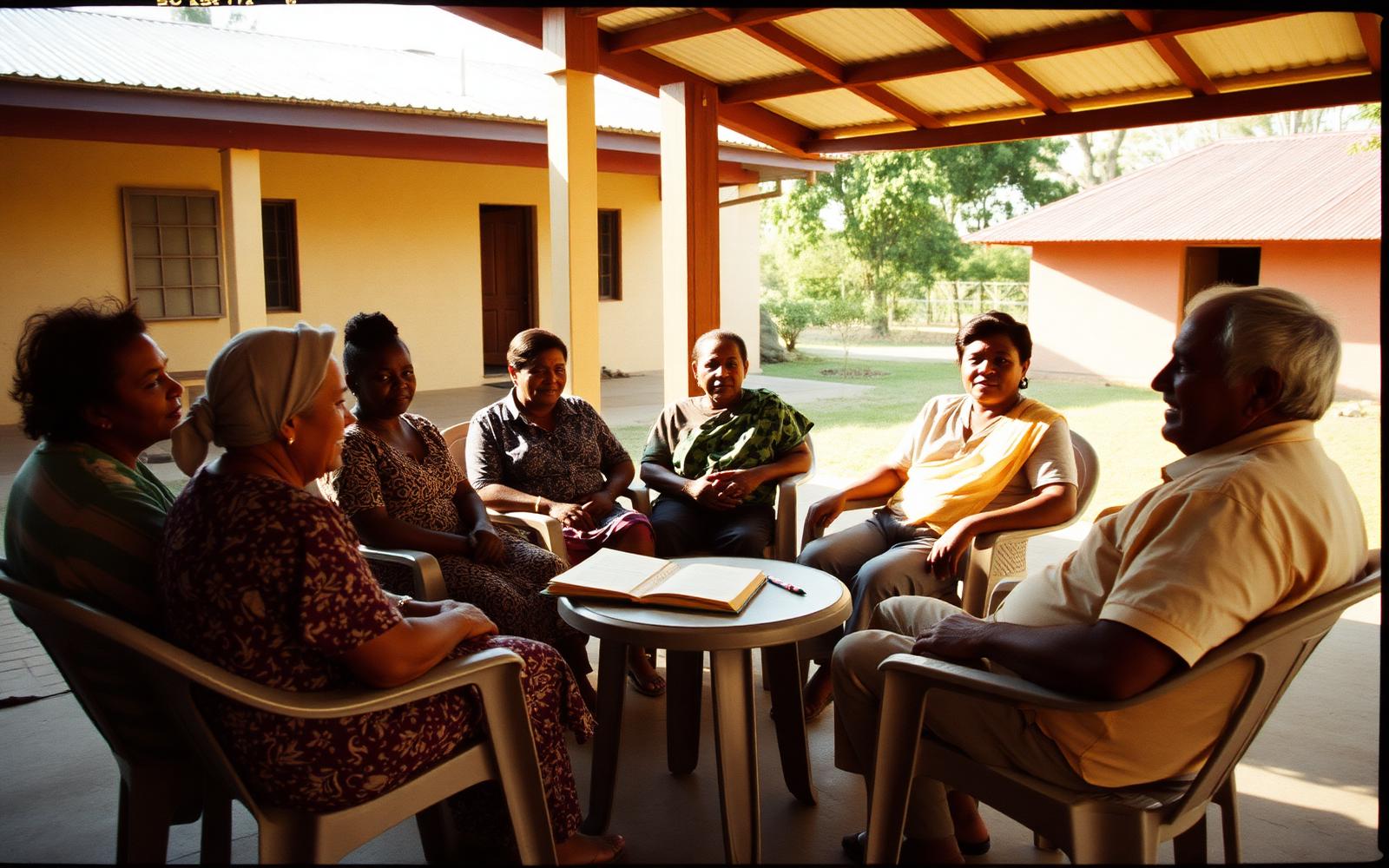
In a market in Lusaka, twelve women meet on the last Friday of every month. Each one hands over the same amount of money to a woman named Chanda, who keeps a small notebook with everyone’s name written down the side. This month, the full pooled amount goes to Mutinta, who needs it to restock her stall before the school term starts. Next month it will go to someone else. By the end of the year, every woman in the group will have received the lump sum once, and the cycle will begin again.
Nobody in that market would call this banking. There is no branch, no loan officer, no interest rate printed on a statement. But it is, in every functional sense, a financial system. It has underwriting, since everyone in the group already knows who pays on time and who does not. It has liquidity, since money moves to whoever needs it most that month. And it has an enforcement mechanism stronger than most contracts, because defaulting means losing your place in a community you will need again next year.
A system with many names, one idea
This form of group saving and lending goes by different names depending on where you are standing. In West Africa it is often called a tontine. In Zambia and parts of Southern Africa it is chilimba. In Cameroon and much of Francophone Africa, tontine again. In Ghana it is susu, in Rwanda ikimina, in Kenya and Nigeria a merry go round or njangi. Jamaicans call it a pardna, Punjabi communities call it a kitty, and economists writing in academic journals give it the least poetic name of all, the rotating savings and credit association, or ROSCA.
The mechanics barely change from one name to the next. A group agrees to contribute a fixed sum at regular intervals, and each round the full pool goes to one member until everyone has had a turn. What changes is the trust holding it together, since there is no court to appeal to if someone stops paying. The only collateral is your reputation in a community you cannot easily leave.
The only collateral is your reputation in a community you cannot easily leave.
Why this matters more than it looks
It would be easy for someone reading this from a bank branch in London or a fintech office in Berlin to file this under charming local custom and move on. The numbers say otherwise. Research on African immigrant communities in the United States has found that participants in these rotating savings groups show meaningfully higher rates of home ownership, small business ownership and car ownership compared to those who do not participate. One well known description from economist F. J. A. Bouman calls this model the poor man’s bank, where money never sits idle for long but changes hands rapidly enough to meet both everyday needs and real investment.
These systems have also proven remarkably durable across very different economies. In Brazil alone, more than five million people were reported as active participants in consórcio style rotating savings groups as recently as 2015. Similar arrangements helped Chinese immigrant communities in Spain keep small businesses afloat during the worst years of the late 2000s Eurozone crisis, by providing fast, interest free lump sums entirely outside the formal banking system.
For most of the western financial world, this entire economy is invisible. It does not show up in a credit bureau file. It does not generate a transaction record a bank can point to when someone applies for their first loan. And yet it is often the single most reliable financial relationship in a person’s life, the one that put a roof over a family’s head or got a small shop through its first difficult year.
What this means for the people building the next generation of finance
This is the gap KinPay Circles was built to sit inside, not to replace what already works, but to give it the structure and visibility it has always deserved. The trust between Chanda and the eleven other women in her group is real and it is valuable, and there is no reason it should stay locked inside a paper notebook forever. When that same trust can be recorded, tracked and carried forward, it becomes something a woman like Mutinta can eventually point to when she is ready to grow beyond what her group alone can lend her.
The opportunity is not to introduce financial behaviour that does not yet exist. It already exists, at extraordinary scale, and has for generations. The opportunity is to finally give it the rails it has never had. For the millions of people already inside a chilimba group, a tontine or a njangi, the point is simpler still. What you have built together already works. We are simply here to make sure it gets to keep working, for longer, for more people, with a little more room to grow.