
Inside a Modern Savings Circle
How communities combine trust, discipline and shared responsibility to create access to finance, and how one group in Mansa, Zambia took that model further.
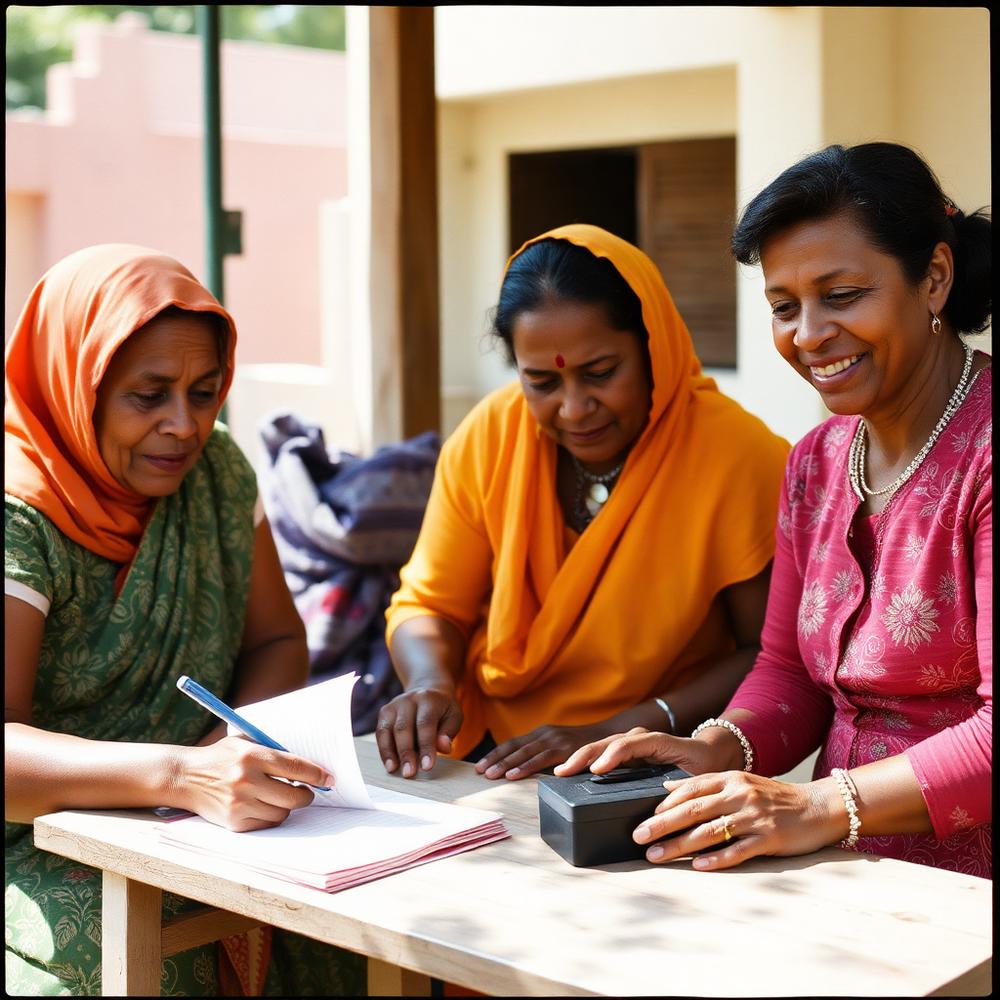
The chilimba group in Mansa had been running for six years before anything changed. Twenty two members, most of them women running small stalls or trading businesses in the local market, met every two weeks to contribute a fixed amount into a shared pool. The group’s leader, a woman everyone called Bana Chanda, kept the record in two places, a school exercise book she carried in her handbag and a running tally in a WhatsApp group that occasionally had forty unread messages by the time the next meeting came around.
It worked, in the way these groups have worked for generations. But it worked harder than it needed to.
Where the strain was showing
By year six, the group had grown past what a single notebook could comfortably hold. New members wanted to join, drawn by the group’s reputation for reliability, but every new member meant more lines to track by hand and more room for a number to get copied incorrectly. When a payment came in slightly late, Bana Chanda had to remember whether that member had also been late two cycles ago, since the exercise book did not total anything automatically. When a member misplaced her phone for a week, the WhatsApp thread she needed to check her own contribution history went with it.
None of this was anyone’s fault. It was simply the ordinary friction of running something valuable using tools that were never designed to hold that much weight. Group leaders across chilimba, tontine and njangi communities everywhere run into the same wall eventually, the model works, but the paperwork starts working against it.
What changed when the group moved to KinPay Circles
Bana Chanda’s group moved their contributions, loans and repayments onto KinPay Circles at the start of the following cycle. The rules of the group did not change. The order of payouts, the contribution amount, the fines for late payment, all of it stayed exactly as the group had always agreed it. What changed was where that agreement lived and how easy it became to see.
Transparency became the default, not a special request. Every member could now see the same set of records at the same time, so a question about who had paid this cycle no longer required a phone call to Bana Chanda. Contributions, loans and repayments sat in one place, visible to everyone in the group, which meant fewer misunderstandings and far less need for anyone to simply take someone else’s word for it.
The administrative load dropped sharply. The exercise book and the WhatsApp thread gave way to a single digital record that organised itself. Nobody had to scroll back through old messages to settle a disagreement about a payment date, and nobody had to recalculate a running total by hand before a meeting.
Accountability stopped depending on memory. Every transaction was recorded as it happened, so the group’s agreed rules, the payout order, the fines for lateness, became far easier to follow simply because everyone could see them applied consistently. Tracking who owed what, and who had already paid their fine for a late contribution, no longer required Bana Chanda to hold all of it in her head.
Leadership got easier, not harder, as the group grew. New members could join without adding to Bana Chanda’s workload the way they once did, since the system carried the administrative weight that used to fall entirely on her. What had felt like an approaching ceiling on how large the group could safely grow simply stopped being a concern.
The group’s history became permanent. Six years of financial trust, once vulnerable to a lost notebook or a phone that fell in the river, now lives somewhere it cannot be misplaced. The group’s entire financial journey, every cycle, every payout, every member who ever joined, stays intact regardless of what happens to any single phone or notebook.
A model built for generations, carrying a little more weight
None of this replaced what made the Mansa group work in the first place. The trust between its twenty two members was already real, built over six years of showing up and paying in, long before any of them had heard of KinPay Circles. What changed was simply how much that trust had to carry on its own. A model that has quietly financed families and small businesses for generations does not need to be reinvented. It needs room to grow without the growing pains that used to come with it, and a way to make sure the record of everything a group has built together survives longer than any single notebook or phone ever could.
Bana Chanda still leads the same group, on the same schedule, with the same twenty two faces around her, plus a few new ones who joined more easily than they would have a year ago. The chilimba has not changed. It simply has room to keep going.